

Headphone Steel Wire Headband Manufacturing Solution | YF-CNC-1026 with End Flattening Unit
Headphone Steel Wire Headband Manufacturing Solution
Headphone steel wire headbands may look like simple formed-wire components, but manufacturing them consistently requires accurate control of wire feeding, bending, profile forming, symmetry and end flattening.
For headphone manufacturers and metal component suppliers, one of the most important production challenges is the treatment of the two wire ends.
The headband wire must first be formed into the required curved profile, while both ends may also need to be pressed and flattened for subsequent headphone assembly.
Yinfeng provides an integrated manufacturing solution based on the YF-CNC-1026 CNC wire forming machine combined with an additional end flattening unit.
Instead of forming the headband and transferring it to a completely separate manual operation, the system can integrate:
Wire Feeding → CNC Forming → Headband Profile Forming → End Flattening → Finished Part
This helps manufacturers improve production consistency while reducing secondary handling.

What Is a Headphone Steel Wire Headband?
A headphone steel wire headband is the metal wire structure used inside or around the upper headband of many headphones and headsets.
Its main functions include:
Supporting the overall headphone structure
Providing elastic clamping force
Maintaining left-right symmetry
Connecting the two earcup assemblies
Providing mechanical strength and repeated bending resistance
Depending on the headphone design, the steel wire headband can have a simple circular profile or a more complex multi-angle formed structure.
For some designs, the two ends of the steel wire also require flattened sections so they can be connected, fixed or assembled with other headphone components.

Why Are the Wire Ends Flattened?
The round steel wire used for the main headband structure is not always suitable for direct assembly at its ends.
Flattening the wire ends creates a wider and more stable connection area.
Typical purposes include:
Creating an assembly connection point
Improving positioning during subsequent assembly
Providing a larger contact area
Preparing the end for punching or further processing
Connecting the steel wire to plastic or metal headphone components
Improving repeatability of the final assembly
This processing step is commonly described as:
Wire End Flattening
or
Flattened Wire End
For this headphone component, both ends can be formed and flattened according to the required product design.

YF-CNC-1026 + End Flattening Unit
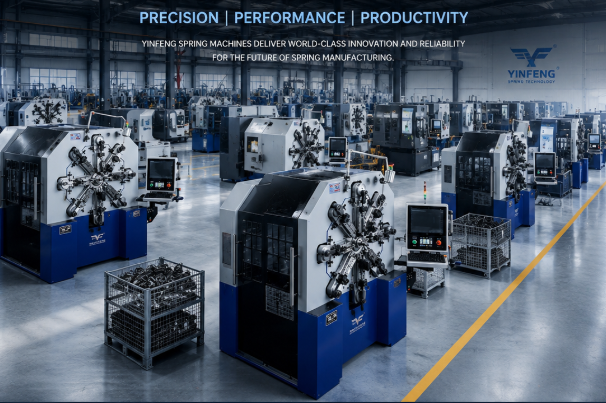
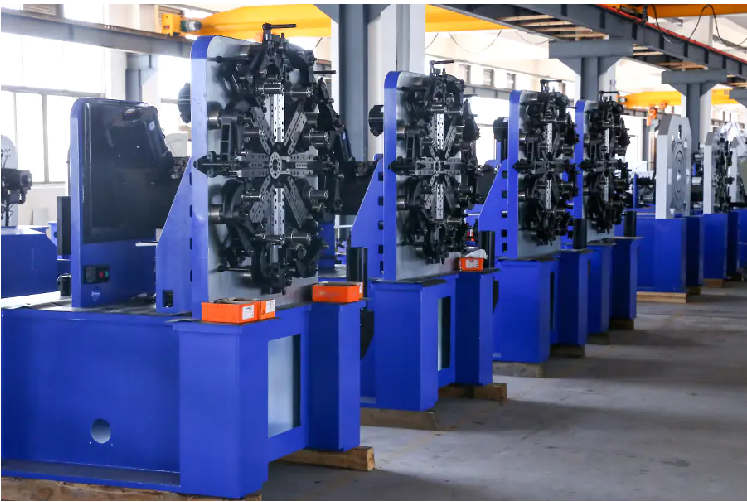
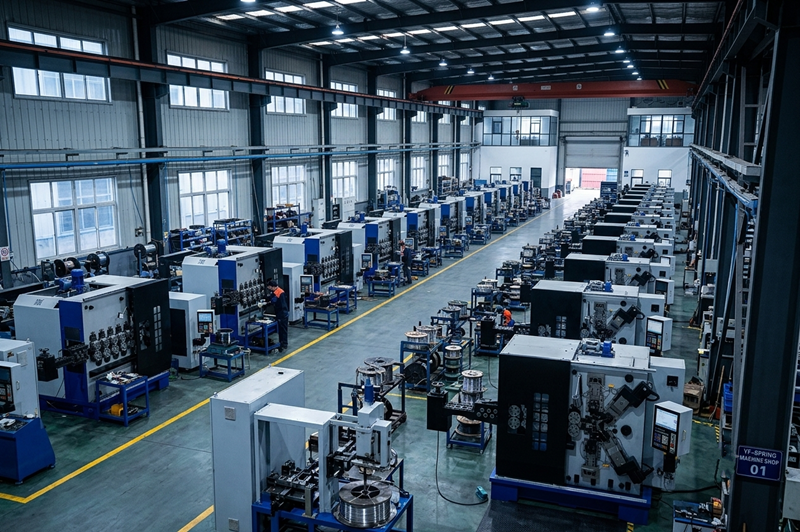
The manufacturing solution combines the forming flexibility of the YF-CNC-1026 CNC Wire Forming machine with a dedicated end flattening device.
The standard YF-CNC-1026/1126 platform is designed for approximately Ø0.2–2.5 mm wire and uses independently controlled servo forming axes for flexible spring and wire-product production.
For this headphone steel wire headband application, an additional flattening mechanism can be integrated according to the required end geometry.
The production system performs two key operations:
1. CNC Wire Forming
The steel wire is fed and formed into the programmed headphone headband geometry.
2. End Flattening
The end flattening unit presses the specified wire-end sections into the required flattened shape.
The objective is to complete the major forming and end-processing operations within a coordinated production cycle.
Manufacturing Process
1. Wire Feeding
Steel wire is automatically fed into the forming area according to the programmed length.
Accurate wire feeding helps maintain consistent dimensions between individual headbands.
2. CNC Headband Forming
The forming tools shape the wire according to the programmed profile.
Depending on the product design, this can include:
Large-radius curves
Straight sections
Transition bends
Angled sections
Symmetrical left and right profiles
The CNC program can be adjusted for different headphone headband geometries.
3. End Positioning
After forming, the wire end is accurately positioned for the flattening operation.
Correct positioning is important because the flattened section must remain consistent in:
Length
Width
Position
Orientation
4. End Flattening
The additional flattening unit applies controlled pressure to the wire end.
The originally round wire section is transformed into a flattened end according to the tooling geometry.
Both ends can be processed according to the customer's component design.
5. Finished Headband
After forming and flattening, the finished part has:
Formed Headband Profile + Flattened End Sections
The component can then proceed to subsequent headphone assembly or other secondary processes required by the customer.

From Round Wire to Finished Headphone Headband
A typical production sequence can be summarized as:
Round Steel Wire
↓
Automatic Wire Feeding
↓
CNC Headband Forming
↓
End Positioning
↓
Wire End Flattening
↓
Finished Steel Wire Headband
This integrated approach is particularly useful for repetitive production where dimensional consistency and end-position repeatability are important.
Key Advantages of the Integrated Solution
Forming + End Flattening
The headband geometry and flattened-end processing can be combined into one coordinated manufacturing solution.
Reduced Secondary Handling
Reducing transfer between independent machines can simplify the production workflow.
Consistent End Position
Servo-controlled forming helps position the workpiece before the flattening operation.
Flexible CNC Programming
Different wire profiles and headband dimensions can be produced by modifying CNC programs and tooling.
Repeat Production
Stored CNC programs can be reused for repeat orders, reducing setup work for previously produced components.
Suitable for OEM Production
The system can be configured according to customer drawings, samples, wire materials and end geometry.
Typical Product
Headphone Steel Wire Headband with Flattened Ends
Product Type: Headphone metal structural component
Material: Steel wire or other suitable metal wire
Main Process: Wire forming + end flattening
Machine Platform: YF-CNC-1026
Wire Diameter Capability: Ø0.2–2.5 mm machine range
End Processing: Flattened / pressed wire ends
Application: Headphones, headsets and audio equipment
Final tooling, flattening dimensions and process configuration should be designed according to the customer's actual drawing and wire specification.
What Types of Headband Shapes Can Be Produced?
The CNC forming system can be configured for different headphone headband designs, including:
Round-profile headphone headbands
U-shaped steel wire headbands
Wide-radius headband frames
Multi-angle headband wire frames
Symmetrical headphone wire structures
Custom steel wire headset frames
Headbands with specially formed end sections
Headbands requiring flattened connection ends
Different products may require different forming tools and flattening dies.
Why Use a CNC Camless Machine for This Application?
Headphone headbands are not conventional compression springs.
Their geometry is closer to a precision formed-wire component that requires controlled bending at several positions.
A CNC camless forming system provides independently controlled forming movements, making it suitable for adjusting the bending sequence and forming geometry without relying entirely on conventional mechanical cam arrangements.
Yinfeng's YF-CNC-1026/1126 platform uses CNC servo-controlled forming and supports stored production programs for repeat manufacturing.
For headphone headband manufacturers, this provides greater flexibility when producing multiple headband designs or changing between OEM projects.
One Machine Platform for Different Headband Designs
Headphone manufacturers often produce multiple models with different:
Headband widths
Curvature
End lengths
Bend positions
Clamping characteristics
Assembly structures
With CNC programming, a manufacturer does not necessarily need an entirely different forming machine for every headband shape.
Changing the program, tooling and process parameters can allow the same machine platform to support different products within its forming capability.
This makes the solution particularly suitable for:
OEM manufacturing, multi-model production and repeat customer orders.
Materials
Depending on the customer's product requirements, the solution can process suitable wire materials such as:
Spring Steel Wire
Carbon Steel Wire
Stainless Steel Wire
Music Wire
Alloy Steel Wire
Material hardness, tensile strength, surface treatment and required flattening ratio can influence the final tooling and process parameters.
Therefore, actual production settings should be established using the customer's real wire and product sample.
Who Is This Solution For?
This manufacturing solution can be considered by:
Headphone manufacturers
Headset manufacturers
Audio equipment component suppliers
Metal wire component factories
OEM headphone parts manufacturers
Precision wire forming companies
Consumer electronics component suppliers
It is especially useful for companies seeking to automate both headband forming and wire-end flattening.
Custom Tooling for Flattened Ends
The flattened end shown on a headphone steel wire headband is not produced by the CNC forming tools alone.
A dedicated pressing and flattening mechanism is required.
Yinfeng can configure the flattening tooling according to factors such as:
Wire diameter
Wire material
Flattened width
Flattened length
Final thickness
End shape
Required surface condition
Left/right end geometry
This allows the production system to be developed around the customer's actual headband component rather than using a generic flattening specification.
Sample Testing Before Machine Configuration
For special formed-wire products such as headphone headbands, providing a drawing or physical sample helps determine the correct machine and tooling configuration.
Recommended information includes:
Product drawing
Wire diameter
Wire material
Material hardness
Overall dimensions
Flattened-end dimensions
Required tolerances
Target production quantity
Yinfeng can then evaluate the forming process and determine the appropriate tooling and flattening configuration.
Frequently Asked Questions
Can the YF-CNC-1026 produce headphone steel wire headbands?
Yes. With suitable tooling and programming, the YF-CNC-1026 can be configured to produce formed-wire components such as headphone steel wire headbands within the machine's applicable wire range.
Can the wire ends be flattened automatically?
Yes. An additional end flattening unit can be integrated into the production solution so the formed wire ends can be pressed into the required flattened geometry.
Can forming and flattening be completed in one production cycle?
Yes. The production system can be configured to coordinate CNC wire forming and end flattening within one production workflow, reducing separate manual handling between these operations.
What wire diameter can the YF-CNC-1026 process?
The YF-CNC-1026 platform is designed for approximately Ø0.2–2.5 mm wire.
The actual suitability for a particular flattened-end design depends on wire diameter, material properties and the required flattening dimensions.
Can different headphone headband shapes be programmed?
Yes. CNC programs can be changed or stored for different products. This is useful for manufacturers producing multiple headphone models or repeat OEM orders.
Can production programs be saved and reused?
Yes. Programs can be stored and reused for repeat production, which helps reduce setup time for previously manufactured products. Yinfeng's current YF-CNC-1026/1126 documentation also describes program-storage capability for repeat production.
Can the control system use different languages?
Yes. The CNC control system supports Chinese and English, and additional interface languages such as Spanish, Russian, Turkish and other languages can be customized according to customer requirements.
Do you need a customer drawing before recommending the flattening unit?
A drawing or physical sample is strongly recommended because the flattening tooling depends on the actual wire size, material, end width, thickness and final geometry.
Why Choose Yinfeng for Custom Wire Forming Solutions?
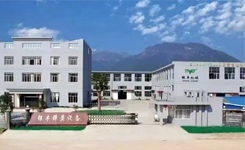
Zhejiang Yinfeng Automation Technology Co., Ltd. has manufacturing roots dating back to 1992 and specializes in CNC spring machines, camless spring machines, wire forming machines and large spring manufacturing equipment. Its manufacturing process covers precision machining, machine assembly, servo programming, electrical control integration, inspection and machine testing.
For special components such as headphone steel wire headbands, Yinfeng can provide more than a standard machine.
The solution can combine:
Machine Configuration + CNC Programming + Forming Tooling + End Flattening Device + Sample Testing + Operator Training + Technical Support
This allows the equipment to be configured around the actual component manufacturing requirement.
Send Us Your Headphone Headband Drawing
If you need to manufacture a headphone steel wire headband with flattened ends, send us your product drawing or sample.
Please provide:
Wire Diameter + Material + Product Dimensions + Flattened-End Dimensions + Required Tolerance + Production Requirement
Yinfeng can evaluate the part and recommend the appropriate YF-CNC-1026 forming and end-flattening solution.